
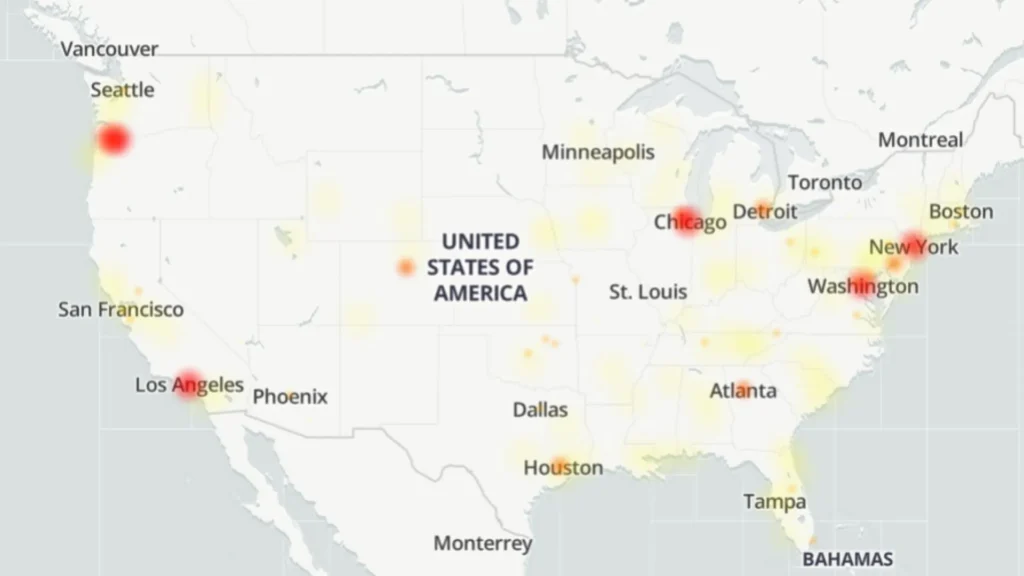
The headlines frame the Verizon outage Today as a massive technical failure: maps of red alerts, reports of “SOS” mode, and timelines for restoration. This narrative of a temporary, large-scale disruption is incomplete. It misses the crucial lens of who is left holding the bag when a network treated as a public utility goes dark. The real story of the Verizon outage today isn’t just about dropped calls; it’s about a fundamental risk asymmetry engineered into our connectivity.
Your Bill Credit vs. Your Real Cost
When service is restored, Verizon’s recourse is clear and contractually limited: you can request a pro-rated bill credit, often a few dollars. This is the carrier’s defined liability. Now, tally your actual cost. The freelance photographer who missed a critical client booking portal. The family unable to reach an aging parent during an emergency. The small business owner whose payment system went offline. These are not hypotheticals; they are the uncapped, real-world risks that users absorb entirely. The carrier’s risk is neatly capped by a service agreement clause by Verizon outage today yours is not.
READ MORE: iOS 26 Problems Aren’t What You Think
The Incentive Gap It Creates
This isn’t a minor detail—it directly shapes system resilience. When the financial and legal consequences for failure are artificially low for the provider in an event like the Verizon Outage Today, it creates a ‘moral hazard.’ The incentive to invest in the level of redundant infrastructure, exhaustive stress-testing, and rapid-response protocols needed to make outages truly rare is diminished. Why? Because the company does not bear the full weight of the failure; you do. The risk is systematically offloaded onto the customer, making recurring disruptions a calculated cost of business rather than an existential threat to the provider.
What This Means for You
This means that treating your cellular carrier as a reliable public utility is a category error. The legal and financial structures governing it do not support that assumption. For you, the practical takeaway is to internalize this risk yourself. It means considering a physical landline for emergencies, diversifying connectivity with a backup provider or satellite option for critical work, and understanding that your phone’s “SOS” mode is not just a feature—it’s a stark admission of the system’s fragility, as demonstrated by the Verizon Outage Today. You are, in effect, your own last-resort IT department.
READ MORE: Apple Creator Studio’s Hidden Lock-In Risk
The Verizon outage Today isn’t just a story of a network hiccup. It’s a stress test that reveals a silent subsidy: your security and stability underwriting a system designed to limit its own accountability. Until that imbalance is addressed, the true cost of being connected will remain on your shoulders, not theirs.


Finally found a reliable place to get everything I need. The download speed is top notch and the content is always updated. Visit 203pubdownload now.
Loving the vibe of this place! The bonuses are generous and it feels just like a real casino from the comfort of my home. Give hannonlinecasino a try!