
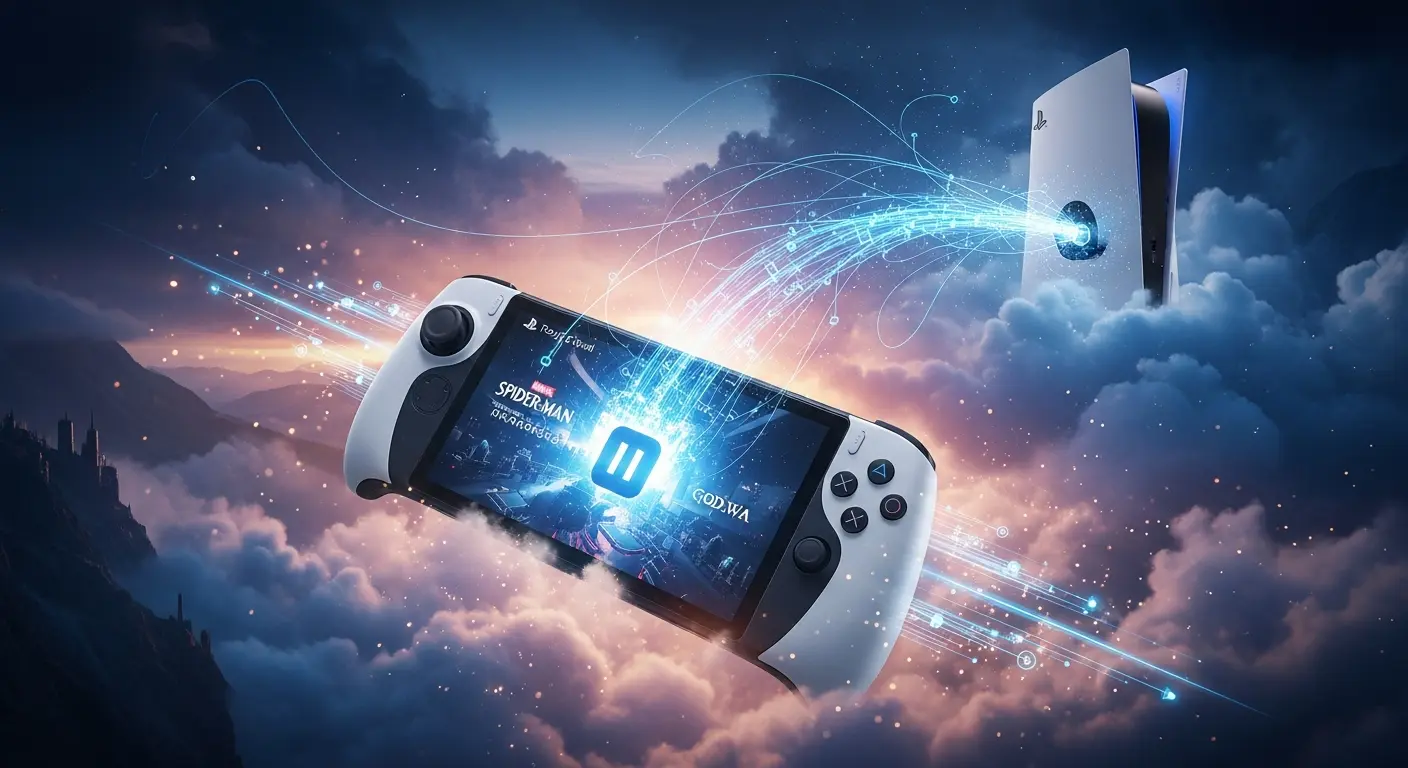
Sony quietly flipped a switch that changes how the PlayStation Portal cloud streaming works: the PlayStation Portal can now stream PS5 games from Sony’s cloud, removing the need for a nearby PS5. Tech coverage is buzzing because this moves the Portal from a glorified remote screen to a standalone cloud client for many PS5 titles.
This matters now because cloud streaming shifts control from local hardware to subscription infrastructure, which affects who can play, where they play, and how publishers distribute games. In this article, you’ll learn what changed, the limits to watch, and why the Portal’s new cloud mode is a meaningful step for portable console gaming.
What happened—who, what, when, and where
Sony rolled out PlayStation Portal cloud streaming, expanding the device’s role beyond Remote Play from a user’s own PS5. Instead of requiring a console on the same network, the Portal can connect to Sony’s cloud servers and stream compatible PS5 titles directly to the handheld. The feature is available through Sony’s cloud gaming tier (PlayStation Plus Premium in markets where that tier exists) and is rolling out in supported regions.
How does PlayStation Portal Cloud Streaming work?
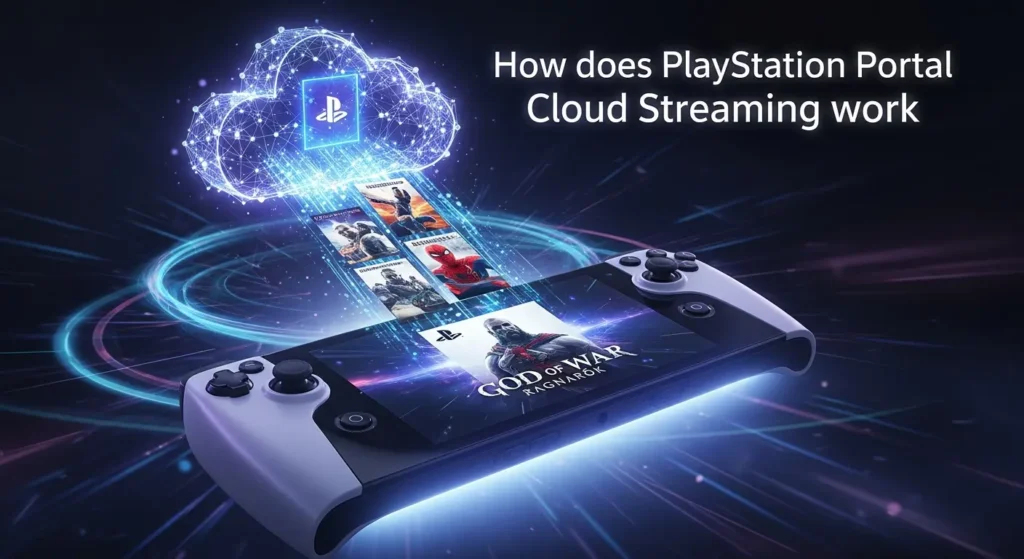
The Portal streams titles that are enabled on Sony’s cloud catalog rather than every game a player owns locally; compatibility varies by title and region. Sony’s documentation and early reporting stress that cloud play requires a stable, low-latency internet connection and a current Plus subscription. Early reports and hands-on coverage describe the catalog as numbering in the hundreds for the Portal at launch, with Sony expanding the supported list over time.
User-facing changes using PlayStation Portal cloud streaming
The system update also added UI improvements tailored to cloud play, including easier catalog sorting, improved capture options for cloud sessions, and other UX enhancements that make cloud sessions feel more like native handheld play. While the PlayStation Portal cloud gaming now runs more like a true cloud client, features such as party chat and certain system integrations may still be limited compared with playing locally on a PS5.
Why this matters for gamers and the industry
Tech migration to the cloud is not new, but the Portal’s transition is symbolic: Sony is testing a future where device ownership matters less than access. For consumers, that means a cheaper entry point to play big-budget PS5 games—if they have the right subscription and internet. For publishers and Sony, it opens distribution flexibility and may increase engagement from owners who don’t keep a PS5 powered on at home.

Infrastructure and UX considerations
Cloud play increases latency and bandwidth tradeoff. Players on robust fiber will see near-console responsiveness; those on weaker connections will notice lag or lower resolution. The catalog constraints also highlight licensing and optimization work—developers and platform engineers must certify games for cloud streaming, which shapes which titles arrive first.
Business signal
This step nudges the ecosystem toward subscription-first experiences and gives Sony a clearer path to position handhelds as subscription devices. Expect iterative catalog growth, region rollouts, and incremental feature parity (social features, saves, crossplay) as Sony tightens the experience.
Read More: AI Platform: Nebius Token Factory vs Microsoft
Techsensi analysis: strategic, not just technical
The PlayStation Portal cloud streaming update is strategic muscle-flexing. Sony isn’t merely improving convenience; it’s testing how far consumers will accept subscription-backed access in place of local ownership. The immediate win is portability without hardware redundancy—users can play high-end PS5 games on a small, purpose-built handheld. The immediate friction points are network reliability, catalog coverage, and missing platform integrations (voice chat, invites). Those are solvable engineering problems; the harder challenge is consumer trust in cloud quality and the pricing calculus of subscriptions versus owning hardware and disks.
What to watch next: catalog expansion, region availability, and whether Sony bridges social/system features so cloud sessions match the full PS5 experience. If those gaps close, the Portal becomes a credible, lower-friction path into Sony’s premium games ecosystem.
Read More: South Korea to Build Nuclear-Powered Submarines with US Approval, Says Trump
Conclusion
Key takeaway: The PlayStation Portal’s cloud streaming transforms the device from a remote-only accessory into a legitimate, subscription-backed portable for many PS5 games—provided you have the connection and the right PlayStation Plus tier.
Techsensi wants to hear from you: have you tried cloud streaming on the Portal, or would you consider buying one instead of a second console? Share your experience in the comments, and read our piece on cloud gaming economics to understand how subscription models are reshaping ownership and access.


One thought on “PlayStation Portal cloud streaming now lets you play PS5 games without a console…”