
If you searched What is edge computing explained, welcome, you’ve landed in the short, useful version that doesn’t make your eyes glaze over. Edge computing means processing data close to where it’s created (your phone, a local gateway, or a tiny data center), instead of hauling everything back to a distant cloud. That close-to-home processing makes devices faster, more private, and less moody when the internet hiccups.
What is edge computing explained?
Think of cloud servers as the downtown skyscraper where heavy-duty work lives. Edge computing is the neighborhood mechanic: quick, local, and great for urgent jobs. When immediacy matters, like a traffic sensor telling an autonomous car to brake, or a smart camera spotting a safety issue, edge devices handle the task in milliseconds. That reduced latency is why businesses and everyday tech feel snappier.
READ MORE: Intel Stock Is Heating Up, Should You Care in 2025?
Why it matters to you?
Edge computing isn’t just corporate buzz. For consumers, it shows up in ways that actually improve daily life:
- Faster response for smart-home devices (no awkward pause after you say the wake word).
- Fewer streaming glitches thanks to local content caching.
- Better privacy because sensitive data can stay on your device.
- Resilience during outages, some services keep working even without full cloud access.
Companies also like edge because it lowers bandwidth costs and enables real-time analytics for retail, healthcare, and manufacturing, meaning smarter, safer services for people.
Edge vs cloud: teammates, not rivals
Edge handles instant decisions, cloud handles heavy lifting like model training, backups, and global analytics. The smart setup is hybrid: run immediate tasks at the edge, send summarized data to the cloud for long-term insight. This combo gives scale without sacrificing speed.
READ MORE: Synopsys Blockbuster Deal: Nvidia’s Massive $2B Bet⚡
Real examples that actually matter
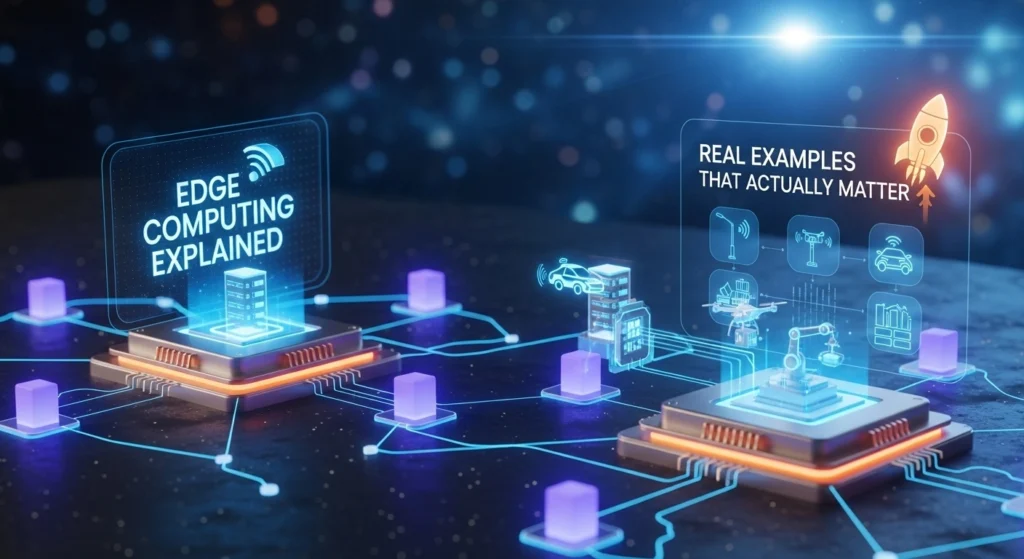
You don’t need a PhD to spot edge tech: traffic cameras that analyze congestion locally, smart thermostats optimizing home comfort without constant cloud pings, or retail stores using local cameras to track foot traffic without streaming raw footage. In healthcare, edge devices can monitor vitals in real time and alert staff faster than a cloud round-trip ever could.
What to watch for before you bet on edge?
Edge sounds great, but it comes with tradeoffs:
- Security: local devices need strong updates and encryption.
- Management: distributed hardware is more to monitor.
- Compatibility: make sure edge gear plays nice with your cloud stack.
READ MORE: Apple AirPods Pro 3: Big Insider Details on the 2025 Update 🎧
why you should care?
If you want faster, more private, and more reliable tech, edge computing is quietly making it happen. Understanding What is edge computing explained helps you see why your gadgets are getting smarter, and why companies are shifting part of their brains closer to the user. 👍


Really impressed with the game variety here. I had a great run last weekend and the support team was super helpful. Highly recommend 888win58com to anyone looking for action.
Really impressed with the variety of games here. It feels very secure and the bonuses are actually generous. Big thanks to krsos888.