
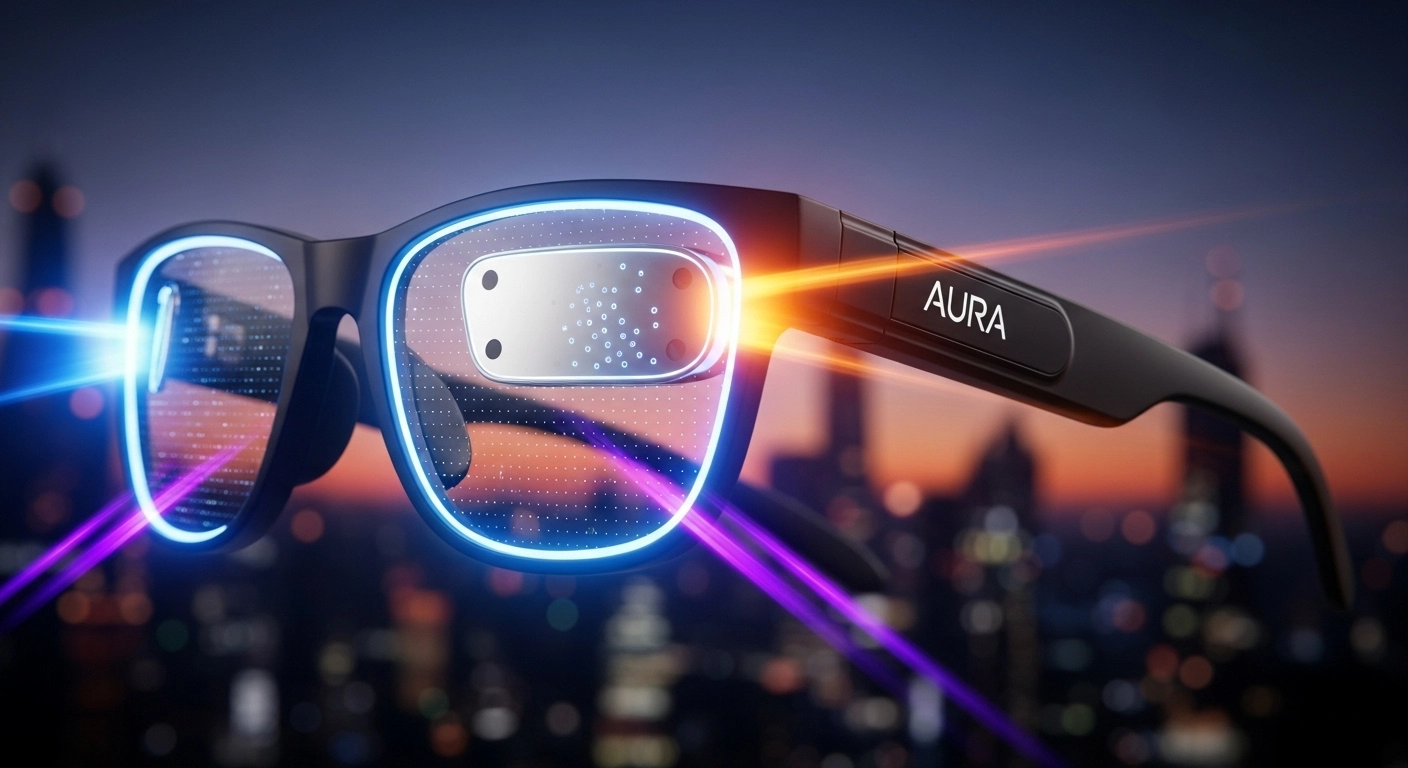
If the future of wearable tech had a runway moment, Xreal Project Aura just walked its sunglasses-style XR that plugs into a pocket battery and promises virtual desktops, live translation, and AI smarts courtesy of Gemini. This isn’t vaporware chatter: it’s a lightweight, wired XR glasses concept built with Xreal and shown as part of Google’s Android XR push.
What makes Xreal Project Aura different?
Think of Project Aura as a bridge between flashy, bulky headsets and fashion-forward eyewear. Instead of a hefty helmet, you get a sunglasses frame connected to a slim pack. The tether keeps weight off your face while delivering a surprisingly wide view and richer processing than older smart-glass ideas. Google’s angle: run the Android XR ecosystem so apps and Gemini AI features show up naturally on glasses. That combo turns these into bona fide Gemini-powered glasses rather than just a heads-up display.
READ MORE: What Causes Bluetooth Interference and How to Fix It Fast 🎧
Why “wired XR glasses” might actually be clever
Yes, “wired” sounds unglamorous, but it’s smart engineering. Tethering lets Project Aura keep the optics sleek while outsourcing battery and compute to a small pack, which means lighter frames and longer usable time per session. For people who want Android XR glasses that can handle virtual desktops, video calls, or live translation without looking like a sci-fi helmet, this approach is a neat compromise. Early previews also highlight hand-tracking sensors and a generous field of view that make mixed-reality tasks feel more natural.
Who’s this actually for?

If you travel a lot, work with lots of windows, or love immersive but subtle tech, Project Aura targets you. It’s pitched at people who want more utility than sunglasses and less bulk than full headsets, creatives, remote workers, and gadget lovers who want AI helpers (translation, quick search, call overlays) without wearing a helmet to the café. For U.S. audiences, imagine replacing a laptop for some tasks during a flight or using on-the-go AR guides while fixing something at home.
READ MORE: Why do smart home devices lose connectivity, and how to stop the drama 😅🏠
The downsides
Prototype status means we don’t have final battery life, price, or a strict release date beyond a 2026 window. Wired setups limit full freedom of movement, and privacy/recording concerns come with any camera-equipped eyewear. Google and partners will have to nail these down before they are everywhere. Still, the trade-offs look reasonable if wearability is the priority.
Bottom line
Xreal Project Aura feels like a practical evolution: less sci-fi costume, more wearable tool. If Google can pair Android XR’s app reach with Gemini’s AI in a polished, fashionable frame, these Gemini-powered glasses could be the first glasses many people actually want to wear. For now, keep an eye on pre-orders and developer apps. This runway show is still a prototype, but the trend toward lighter, smarter XR is very real. 😎
READ MORE: Apple AirPods Pro 3: Big Insider Details on the 2025 Update 🎧